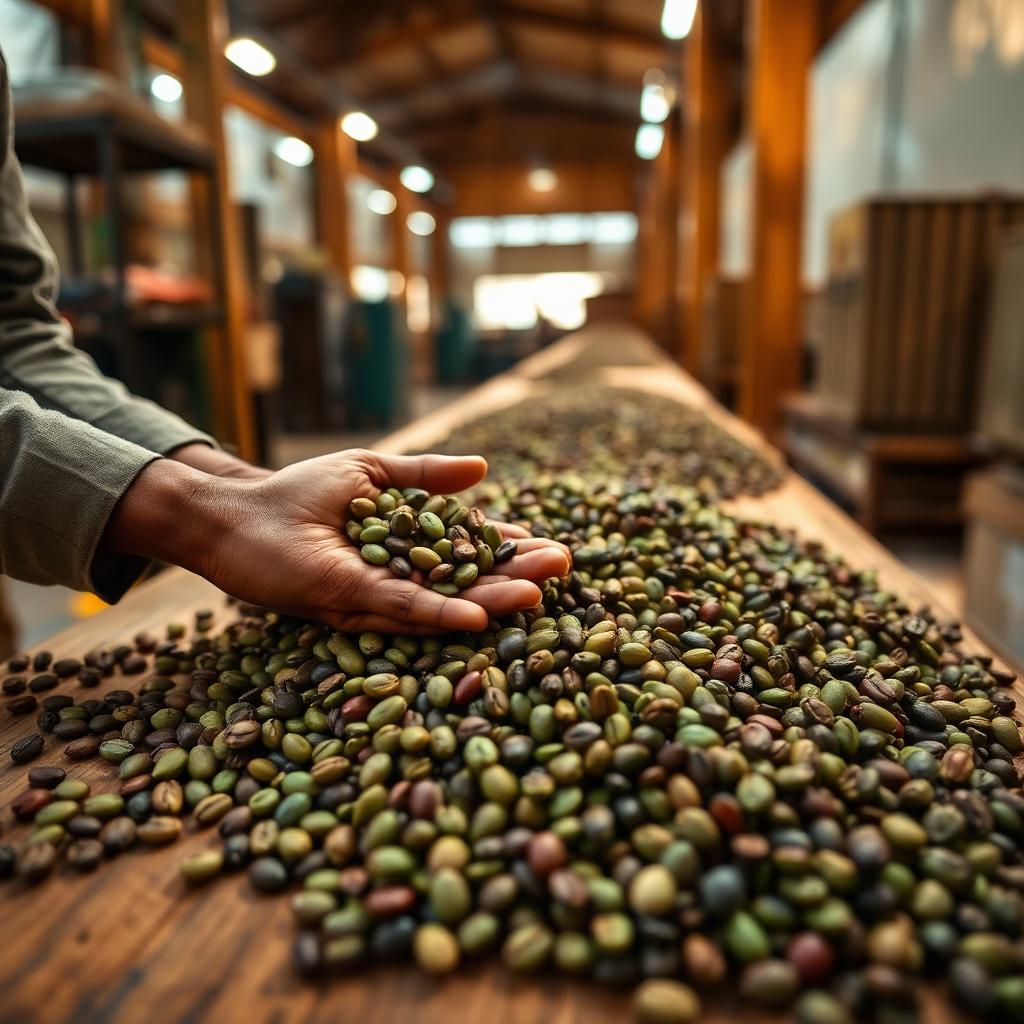
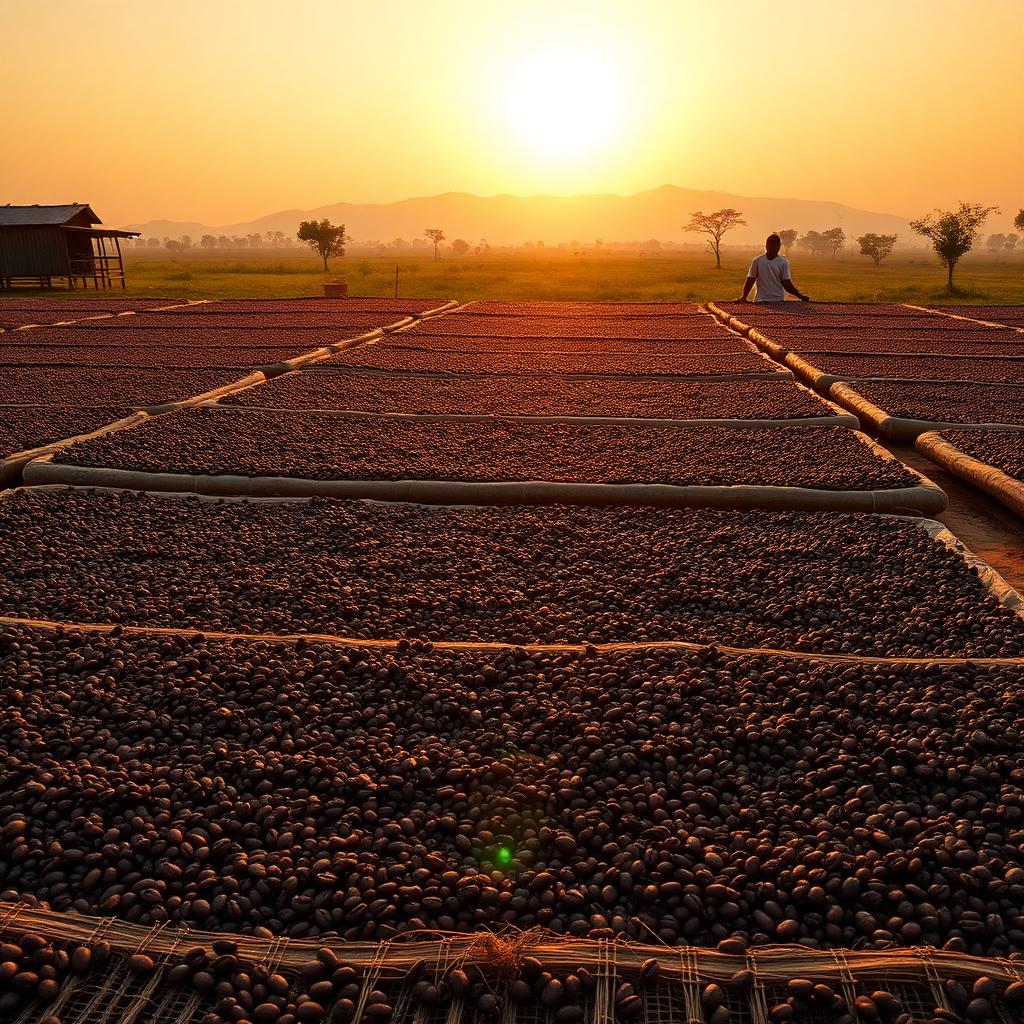
A Guji-based specialty green coffee exporter supplying roasters and importers worldwide. From sourcing and grading to documentation and shipping via Djibouti, we manage the full export workflow so you receive traceable, cup-consistent Ethiopian coffee on a dependable timeline.
"To connect the world's finest roasters with Ethiopia's exceptional Guji coffees — delivering full traceability from washing station to port, fair prices to farming communities, and uncompromising quality in every shipment."
Founded 2023 · Addis Ababa, Ethiopia
Heritage
Why Is Ethiopia the Birthplace of Arabica Coffee?
Ethiopia is the primary genetic centre of origin for Coffea arabica. As a premium arabica exporter based in Addis Ababa, we manage every step of the Ethiopian coffee export process — from sourcing at Guji washing stations to green coffee export logistics through the port of Djibouti. Our role as a premium arabica exporter ensures full traceability and fair pricing on every shipment.
Ethiopia is the primary center of origin for Coffea arabica. As a licensed Ethiopian coffee exporter, we act as the bridge between smallholder farmers in Guji and the global specialty market.
Our green coffee export operation ensures that the exceptional quality of premium arabica reaches discerning roasters worldwide. Every shipment from our premium arabica exporter facility includes complete documentation and quality verification.
The Ethiopian coffee export system operates under a dual structure regulated by the Ethiopian Coffee and Tea Authority. As a specialty coffee exporter, we navigate both channels.
Ethiopian Commodity Exchange (ECX)
A centralized trading platform designed to provide market efficiency. Coffee is graded by the Coffee Quality Inspection Center (CQIC) and sold to exporters.
Standardized grading
Market efficiency
Price transparency
Regional classification
Direct Trade (Vertical Integration)
Allows exporters who own washing stations or work directly with specific cooperatives to maintain identity-preserved lots. Essential for the specialty coffee sector.
Full traceability
Relationship-based
Premium quality focus
Farm-level identity
Our Work
What Does an Ethiopian Coffee Exporter Do?
A responsible Ethiopian coffee exporter manages the complex logistics and quality control inherent in the green coffee export supply chain.
Sourcing
Identifying exceptional lots at the farm or washing station level through established relationships and quality protocols.
Verification
Ensuring all coffee meets the legal and physical requirements for export, including quality grading and documentation.
Logistics
Managing transport from high-altitude washing stations to the dry mills in Addis Ababa and finally to the port of Djibouti.
Sourcing Regions
Explore the Guji Sub-Regions We Export From
Every lot we export as an Ethiopian coffee exporter is traceable to one of three distinct Guji sub-regions, each with unique terroir and flavor characteristics.
How Guji Coffee Moves From Washing Station to Your Roastery
An end-to-end view of the Ethiopian green coffee export process — what happens at every stage, who is responsible, and how long each phase takes.
Harvest and primary processing (November–February)
Guji's main harvest runs from late October to early February, peaking in December and January. Smallholder farmers selectively pick ripe cherries by hand and deliver same-day to one of the region's washing stations in Uraga, Hambela, or Shakiso. Cherries are graded on a flotation tank to remove unders and floaters, then routed to either fully washed (depulped, fermented 36–48 hours, washed, and dried on raised African beds) or natural processing (dried whole on beds for 18–25 days with frequent turning). Honey processing is a smaller share of Guji output, typically reserved for micro-lot programs.
Dry milling and grading in Addis Ababa (January–April)
Once parchment is fully dried to 10.5–11.5% moisture, lots are bagged and transported to a dry mill in Addis Ababa or Modjo. Dry milling hulls the parchment, polishes the bean, sorts by density on gravity tables, and screens by size (typically 14, 15, 16, and 17+). Optical sorters and hand picking remove defects to meet Grade 1 (no more than three defects per 300 g sample) or Grade 2 (4–12 defects) standards. The Ethiopian Coffee and Tea Authority's quality inspectors grade and certify every export lot before it can leave the country.
Sample dispatch and buyer approval (February–June)
Pre-shipment samples — typically 300 g per lot — are sent by DHL or FedEx to prospective buyers in Europe, North America, Asia, and the Middle East. Buyers cup blind, score on the SCA protocol, and confirm purchase in writing. Once a contract is signed, the exporter holds the physical lot under the contract reference until the shipping window opens. Holding capacity at the dry mill is finite, so committed lots are released for stuffing on a first-contracted, first-shipped basis.
Contracting, documentation, and pre-export approval
The contract is signed under GCA, ECF, or a comparable template, naming Incoterm (FOB Djibouti or CIF destination), quality clause, shipping window, and payment instrument. The exporter then compiles the documentation package: commercial invoice and packing list, ICO certificate, ECTA quality certificate, phytosanitary certificate from the Ministry of Agriculture, certificate of origin from the Addis Ababa Chamber of Commerce, weight note, and the carrier's bill of lading after vessel sailing. Organic, Fairtrade, and Rainforest Alliance certificates accompany lots from certified washing stations.
In simple terms: FOB Djibouti means our price covers getting your coffee loaded onto the ship in Djibouti — you (or your forwarder) arrange and pay for the ocean freight from there. CIF means our price already includes that shipping and insurance to your destination port, so there's one fewer thing for you to arrange separately.
Bagging, container stuffing, and the Djibouti corridor
Export-ready coffee is filled into 60 kg jute bags with GrainPro or Ecotact liners to protect cup quality during ocean transit. A standard 20-foot container takes 300–320 bags (18,000–19,200 kg of green coffee). Containers are stuffed either at the Addis Ababa dry mill or at the Modjo dry port, sealed under Ethiopian Customs supervision, and trucked across the 850 km Addis-Djibouti corridor on a 12–14 hour run. At Djibouti, containers are loaded onto vessels operated by major carriers including Maersk, MSC, CMA CGM, and Hapag-Lloyd.
Ocean transit and arrival
Transit times from Djibouti depend on the destination. Northern European ports (Antwerp, Hamburg, Rotterdam) typically receive containers in 18–22 days. US East Coast (New York, Houston) takes 28–35 days via the Suez Canal. US West Coast (Long Beach, Oakland) runs 40–48 days. East Asian ports (Shanghai, Busan) take 22–28 days. Middle Eastern ports (Jebel Ali, Jeddah) are reached in 5–10 days. Peak shipping season runs May through August, when vessel space tightens — book at least 4–6 weeks ahead during this window.
Once the container clears customs at the destination port, the buyer pulls arrival samples and cups against the approved pre-shipment type sample. Moisture, water activity, and visual defect counts are recorded. Any quality variance outside contract tolerance is filed as a claim within the contractual notice period — typically 14 days from discharge — supported by an arrival cupping report and, if needed, a third-party inspection. Most disputes are settled bilaterally; unresolved cases go to arbitration under GCA, ECF, or the contract's named body.
Repeat business and seasonal planning
Roasters and importers placing recurring orders typically stagger contracts across the harvest calendar: a fresh-crop arrival in June or July for the new specialty season, a mid-year top-up in September or October, and a final stock build before the next harvest cycle. Storing green coffee in a temperature-controlled warehouse extends usable cup life to 9–12 months from shipment for fully washed lots and 8–10 months for naturals when sealed in GrainPro liners.
Our Sourcing Philosophy
As a premium arabica exporter, we operate on the principle that quality results from long-term partnership. By providing consistent market access and technical feedback to washing station managers, our Ethiopian coffee export service ensures that premium arabica shipments meet international specialty standards.
We're working toward farm-level traceability across our Guji supply — mapping washing stations back toward the contributing farms — so that EU-bound roasters have the geolocation and due-diligence documentation the EU Deforestation Regulation (EUDR) requires. Large and medium operators must comply by 30 December 2026.
EUDR requires that coffee placed on the EU market be deforestation-free (grown on land not deforested after 31 December 2020) and legally produced, backed by plot-level geolocation data and a due-diligence statement. That's a significant undertaking in Ethiopia, where cherry from thousands of sub-hectare smallholder plots is combined at communal washing stations — read our full breakdown of what EUDR requires and how it's changing sourcing on the ground.
Common questions from importers and roasters about working with us.
What is your minimum order quantity (MOQ)?
Our standard minimum order is one full container (approximately 19 metric tons for a 20ft container). However, we can accommodate smaller trial orders of 1-5 bags for qualified buyers looking to sample our offerings before committing to larger volumes.
What payment terms do you offer?
We typically work with CAD (Cash Against Documents) or LC (Letter of Credit) at sight for new relationships. After establishing a track record, we can discuss more flexible terms. All prices are quoted FOB Djibouti or CIF to your destination port.
How do you ensure traceability?
For Direct Trade lots, we maintain full traceability from washing station to export, including harvest dates, processing methods, and cupping scores. ECX lots are traceable to region and grade. All shipments include complete documentation including ICO certificates and phytosanitary certificates.
When is Ethiopian coffee available for shipment?
The main harvest runs November through January. Fresh crop typically becomes available for export between March and June. We recommend booking early in the season to secure the best lots, especially for high-scoring specialty grades.
Do you offer pre-shipment samples?
Yes, we provide offer samples for all available lots. Samples are typically 300g and can be shipped via DHL or FedEx. For serious buyers, we also offer arrival samples from our warehouse inventory.
What quality certifications do you hold?
We hold organic certification (EU and USDA), Rainforest Alliance, and UTZ certifications for applicable lots. We also work with Fairtrade certified cooperatives. Certification availability varies by lot and season.
Partner with the Best Ethiopian Coffee Exporter
Whether you're an importer, roaster, or specialty buyer, our Ethiopian coffee export service and green coffee export logistics connect you with premium arabica from Ethiopia's finest growing regions. As a trusted premium arabica exporter and specialty coffee supplier, we deliver direct source Guji coffee — unroasted coffee beans ready for your own roast profile — to buyers worldwide.